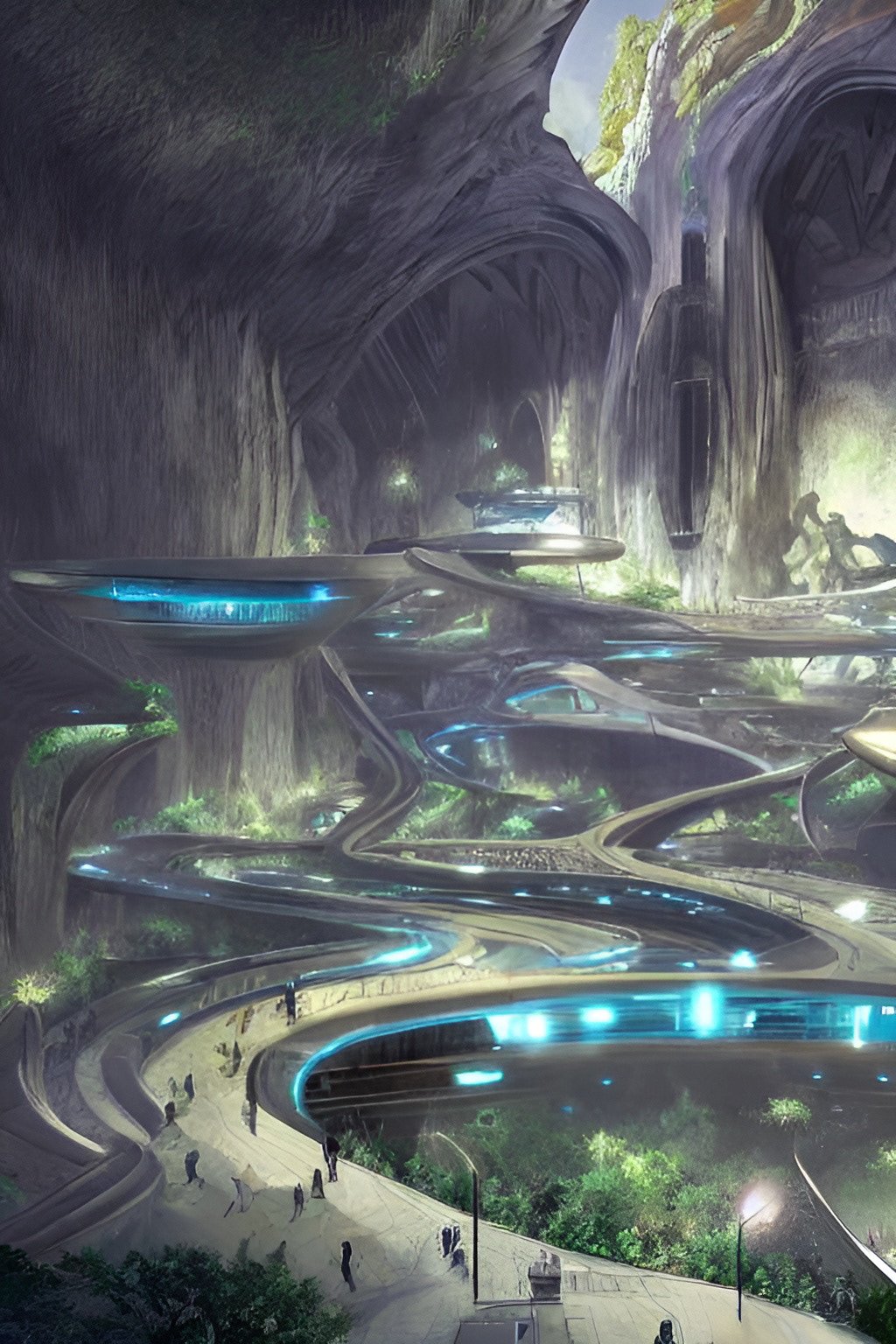
The urban landscape has always been a canvas for human ambition, but what if you could conjure a sprawling metropolis, a serene suburban street, or a futuristic cityscape with nothing but a few descriptive words? The era of AI-powered design is upon us, and with it, a remarkable suite of tools dedicated to crafting stunning urban environments. If you're looking for the Top AI Tools for Generating Cityscapes, you're not just seeking a gadget; you're looking for a creative partner that can transform your vision into visually arresting urban scenes.
Gone are the days of painstakingly rendering every brick and billboard by hand. Today, artificial intelligence handles the heavy lifting, allowing architects, game developers, educators, and artists to iterate, visualize, and build worlds faster and more realistically than ever before.
At a Glance: Why AI is Revolutionizing Cityscape Generation
- Unleash Creativity: Describe your dream city in text, and watch it materialize in moments.
- Save Time & Resources: Drastically cut down on design and rendering hours for complex scenes.
- Boost Realism: Achieve stunning photorealistic details, from lighting to textures and weather effects.
- Enhance Iteration: Experiment with countless variations of styles, layouts, and moods with ease.
- Broaden Applications: Ideal for urban planning, game design, educational tools, and visual storytelling.
- Smart Editing: AI-powered tools simplify adjustments, cropping, and detail refinement.
The Dawn of Digital Metropolises: Why AI Cityscapes Matter
Think about the sheer complexity of a city. Skyscrapers pierce the clouds, streets weave intricate paths, and countless details from streetlights to park benches coalesce into a living, breathing environment. Traditionally, creating such a scene from scratch was a monumental task, demanding immense time, specialized software, and expert skill. This bottleneck often stifled creativity and slowed down critical projects.
Enter artificial intelligence. AI cityscape generators have emerged as a game-changer, democratizing the creation of urban visuals. They don't just replicate existing cities; they understand the elements that define urban spaces – the interplay of light and shadow, architectural styles, street dynamics, and even atmospheric conditions. This understanding allows them to construct entirely new, contextually appropriate, and visually compelling scenes from simple text prompts. Whether you're a city planner prototyping new urban designs, a game developer building an immersive open world, or a teacher illustrating complex geographical concepts, these tools offer unparalleled efficiency and creative freedom.
What Makes an AI Cityscape Tool Truly Stand Out?
Not all AI tools are created equal. When evaluating the best options for generating cityscapes, you should look for a robust feature set that goes beyond simple image generation. Here's what the leading tools offer:
From Words to Worlds: AI-Generated Cityscapes from Text
The core of any top-tier AI cityscape generator is its ability to interpret natural language. You should be able to describe your vision – "a bustling cityscape with neo-futuristic skyscrapers, holographic advertisements, and flying vehicles under a perpetually rainy sky" – and have the AI translate that into a vivid image. Look for tools that allow granular control over:
- Building Styles: From gothic to brutalist, art deco to sci-fi.
- Street Layouts: Crowded boulevards, winding alleys, or sprawling avenues.
- Lighting Effects: Golden hour, neon glow, stark midday sun, or moody twilight.
- Weather Conditions: Foggy mornings, torrential downpours, or crisp, clear days.
- Mood and Atmosphere: Quaint, dystopian, vibrant, or desolate.
This prompt-driven approach empowers you to iterate quickly and explore a vast array of aesthetic possibilities without needing to delve into complex 3D modeling software.
Precision Perfected: Smart AI Crop & Framing
Once an image is generated, framing is everything. A superior AI tool understands composition. Features like "Smart AI Crop" automatically identify focal points—be it the majestic sweep of a skyline, the intricate details of a building facade, or the dynamic flow of streets—to provide perfectly framed images. This is incredibly useful for specific applications such as:
- Travel Blogging: Capturing the essence of a city's most iconic views.
- Real Estate Marketing: Highlighting architectural features or urban amenities.
- Urban Content Creation: Ensuring your visuals always look professional and compelling.
Sculpting the Scene: Intelligent Editing Tools
Raw AI output is a great starting point, but the best tools offer advanced editing capabilities that are also AI-enhanced. Think of a photo editor on steroids, but with an intelligent assistant. Key features include:
- Color and Lighting Adjustments: Intuitively modify hues, saturation, brightness, and contrast while maintaining natural tones and depths.
- Obscuring Distracting Details: Seamlessly remove unwanted elements from a scene without leaving awkward patches.
- Blending Textures and Elements: Smoothly integrate new details or modify existing ones while preserving visual coherence.
- Upscaling and Refinement: Enhance resolution and add intricate details to make your cityscapes truly pop.
- Inpaint/Outpaint: Precisely fill in specific areas or extend the canvas beyond its original borders, maintaining stylistic consistency.
These smart editing tools ensure that your final cityscape is not just AI-generated, but also polished to perfection, ready for any project.
Diving Deep: How to Generate Stunning Cityscapes with AI (A Pippit Walkthrough)
To illustrate the power and simplicity of these tools, let's walk through the process using a leading platform like Pippit. Pippit offers a free online cityscape generator that exemplifies many of the features we've discussed, making detailed, realistic city scenes accessible to everyone.
Step 1: Entering the Creative Studio
First things first, you need to access the AI generation interface. On the Pippit homepage, you'll typically navigate to an "Image studio" or "AI design" section. This is your blank canvas, ready to be filled with your urban vision. Here, you might also find initial customization options to set the overall tone, such as default color palettes, lighting schemes, or a general mood.
Step 2: Prompting Your Urban Vision to Life
This is where the magic happens. You'll enter a descriptive prompt that guides the AI in creating your cityscape. The more specific and evocative your prompt, the better the results.
Example Prompt: "Create a bustling cityscape with towering skyscrapers, streets filled with glowing lights, lush public parks, and a vibrant sunset skyline. Incorporate reflections on wet streets and a mix of classic and modern architecture."
Don't be afraid to experiment with your prompts. Think about the style, the time of day, the weather, the density, and any specific landmarks or features you envision. Many users find inspiration in Best Reddit city image prompts, which can provide excellent starting points or advanced techniques for crafting truly unique scenes.
Beyond text, powerful generators like Pippit often allow you to:
- Upload Reference Images: Provide visual inspiration to guide the AI's aesthetic.
- Select Color Palettes: Define the dominant color scheme for your cityscape.
- Choose Aspect Ratio: Optimize the image dimensions for your specific output (e.g., social media, website banner, print).
Once your prompt and settings are ready, click "Generate." The AI will typically produce multiple variations, giving you options to choose from.
Step 3: Refining and Perfecting Your Creation
The initial generations are just the beginning. The next stage involves refining your chosen cityscape using Pippit's smart editing tools:
- Upscale: If your initial output is lower resolution, use the Upscale tool to enhance its detail and quality, making it suitable for larger displays or prints.
- Inpaint: Need to add a specific element, like a new car on the street or a billboard on a building? Inpaint allows you to select an area and generate new content within it, seamlessly blending it with the existing scene.
- Outpaint: Want to extend your cityscape beyond its current borders? Outpaint intelligently expands the image, adding new, contextually relevant urban elements.
- Erase: Remove any unwanted elements, from a distracting detail to a misplaced building, with intelligent content-aware filling.
These tools empower you to fine-tune every aspect until your cityscape perfectly matches your vision.
Step 4: Finalizing and Downloading
Once you're completely satisfied with your masterpiece, it's time to export. Pippit allows you to download your polished cityscape in various formats, ready for integration into your projects.
Beyond the Canvas: Advanced Use Cases for AI Cityscapes
The utility of AI-generated cityscapes extends far beyond just pretty pictures. They are powerful tools driving innovation across multiple industries.
Smart Cities for Urban Planners and Architects
Imagine designing an entire city block, testing different street layouts, or visualizing new building placements in a realistic 3D environment, all before breaking ground. AI city generators make this a reality.
- 3D City Shapes: Tools can export 3D city shapes, allowing urban planners and architects to integrate them into their CAD software for elaborate plan development.
- Virtual Reality (VR) Testing: Test new designs and building placements in an immersive VR environment, assessing impact on traffic flow, light exposure, and overall aesthetics. This accelerates decision-making and reduces costly real-world errors.
- Futuristic Concepts: Envision and plan for "smart cities" complete with neon lights, high-tech buildings, and integrated sustainable infrastructure, easily customizing lighting, structures, and viewpoints for dynamic, forward-thinking designs.
AI Cities as Innovative Teaching Tools
Education thrives on visual engagement, and AI-generated cityscapes offer a revolutionary way to teach complex subjects.
- Architecture & Urban Design: Students can rapidly visualize different architectural styles, urban layouts, and planning principles, transforming theoretical concepts into tangible, hands-on graphics.
- Geography & History: Illustrate historical urban development, geographical features of various cities, or the impact of environmental factors on urban growth.
- Accelerated Learning: With realistic and customizable city graphics, students can grasp concepts faster and engage more deeply with the material.
Urban Worlds for Game Design and Virtual Reality
Game content developers understand the immense effort required to build believable virtual worlds. AI cityscape makers are a huge time-saver.
- Realistic or Stylized Worlds: Generate entire cities – from bustling downtowns with towering skyscrapers to quiet suburban streets or fantastical, stylized urban environments – with incredible ease and speed.
- Asset Generation: Create detailed city layouts, roads, buildings, parks, and points of interest that can be directly exported into game development engines or VR platforms.
- Gameplay Options: Design varied urban landscapes that offer unique challenges and opportunities for gameplay, enriching the player experience.
Achieving Photorealism: What to Expect from AI-Generated Cityscapes
A common question is, "How realistic can AI-generated cityscapes truly be?" The answer is, very realistic, though the degree of realism often depends on your input, chosen settings, and the sophistication of the AI model.
- Detail Preservation: Advanced AI models excel at preserving intricate details such as reflections on glass surfaces, the subtle play of light and shadow, varied textures of building materials, and the nuanced atmospheric effects of weather.
- Dynamic Environments: You can generate cityscapes with varied weather conditions (rainy streets, foggy mornings) and times of day (glowing sunsets, vibrant night skylines), adding depth and a dynamic feel that transcends a static image.
- Stylized vs. Realistic: AI tools can seamlessly switch between highly realistic urban scenes and more stylized, illustrative interpretations, giving you complete creative control over the aesthetic. Pippit, for instance, uses advanced AI to create intricate, visually appealing buildings, streets, and environments that can range from hyper-realistic to dreamlike, based on user prompts.
The key is often in the prompt and the post-generation refinement. By providing clear, detailed instructions and utilizing the smart editing tools, you can guide the AI towards breathtakingly realistic results.
Common Questions & Smart Answers About AI Cityscape Generation
Let's address some frequently asked questions that come up when discussing these powerful tools.
How can a modern city map generator help plan urban projects?
Modern city map generators, especially those leveraging AI, are incredibly effective. They allow planners to quickly visualize different urban layouts, test infrastructure changes, and even conceptualize entirely new districts. For sci-fi concepts, they can instantly render cities with neon lights and high-tech buildings. Tools like Pippit offer AI-based customization of lighting, structures, and viewpoints, which is invaluable for dynamic, futuristic urban planning, accelerating the conceptualization phase significantly.
Are cityscape makers ideal for game design?
Absolutely. Cityscape makers are ideal and incredibly time-saving for generating realistic or fantastical urban landscapes for games. They provide numerous derived options for gameplay scenarios, allowing developers to create diverse environments without months of manual labor. Tools such as Pippit can generate detailed city layouts, intricate road networks, a variety of buildings, and points of interest, all ready for export into game development engines or VR applications. This drastically cuts down development time and costs.
Can cityscape design tools generate realistic visuals with varied weather and times?
Yes, they excel at this. Advanced cityscape design tools are programmed to understand and render varied weather conditions (from rain-slicked streets to sun-drenched plazas) and times of day (glowing sunsets, vibrant nightscapes). They add realistic lighting and atmospheric effects, which include volumetric fog, dynamic shadows, and accurate reflections, all of which add immense depth and a dynamic, believable feel to city scenes.
How realistic are AI-generated cityscapes?
The realism of AI-generated cityscapes can range from stylized illustrations to highly photorealistic urban scenes. The level of detail and fidelity achieved largely depends on the input prompts, the quality of the AI model, and the user's refinement efforts. Top-tier tools utilize advanced AI to generate intricate, visually appealing buildings, streets, and environments that preserve subtle details like reflections, accurate lighting, and realistic textures, making them virtually indistinguishable from real photographs or meticulously rendered 3D scenes.
Choosing Your AI Cityscape Generator: What to Look For
While we've highlighted Pippit as a robust example, many AI tools exist, each with its strengths. When making your choice, consider these factors:
- Ease of Use: Is the interface intuitive? Can you get started quickly without a steep learning curve?
- Feature Set: Does it offer text-to-image generation, smart editing tools, and various export options?
- Realism vs. Stylization: Can it produce the specific aesthetic you're aiming for?
- Cost: Are there free tiers, subscription models, or pay-per-generation options?
- Community & Support: Is there a community for sharing tips and a responsive support team?
- Integration: Does it integrate with other tools in your workflow (e.g., game engines, design software)?
Ultimately, the best tool is one that seamlessly integrates into your creative process and consistently delivers results that meet your project's demands.
Your Next Steps in AI Cityscape Design
The world of AI-generated cityscapes is an exciting frontier for creativity and efficiency. Whether you're an urban planner sketching future possibilities, a game developer crafting immersive new worlds, an educator inspiring future generations, or simply an artist exploring new visual horizons, these tools are designed to empower you.
Start by experimenting. Take a platform like Pippit for a spin. Play with different prompts, push the boundaries of what you describe, and explore the myriad editing features available. You'll quickly discover how these intelligent assistants can transform your workflow and elevate your visual output. The next great metropolis might just be waiting for your prompt.