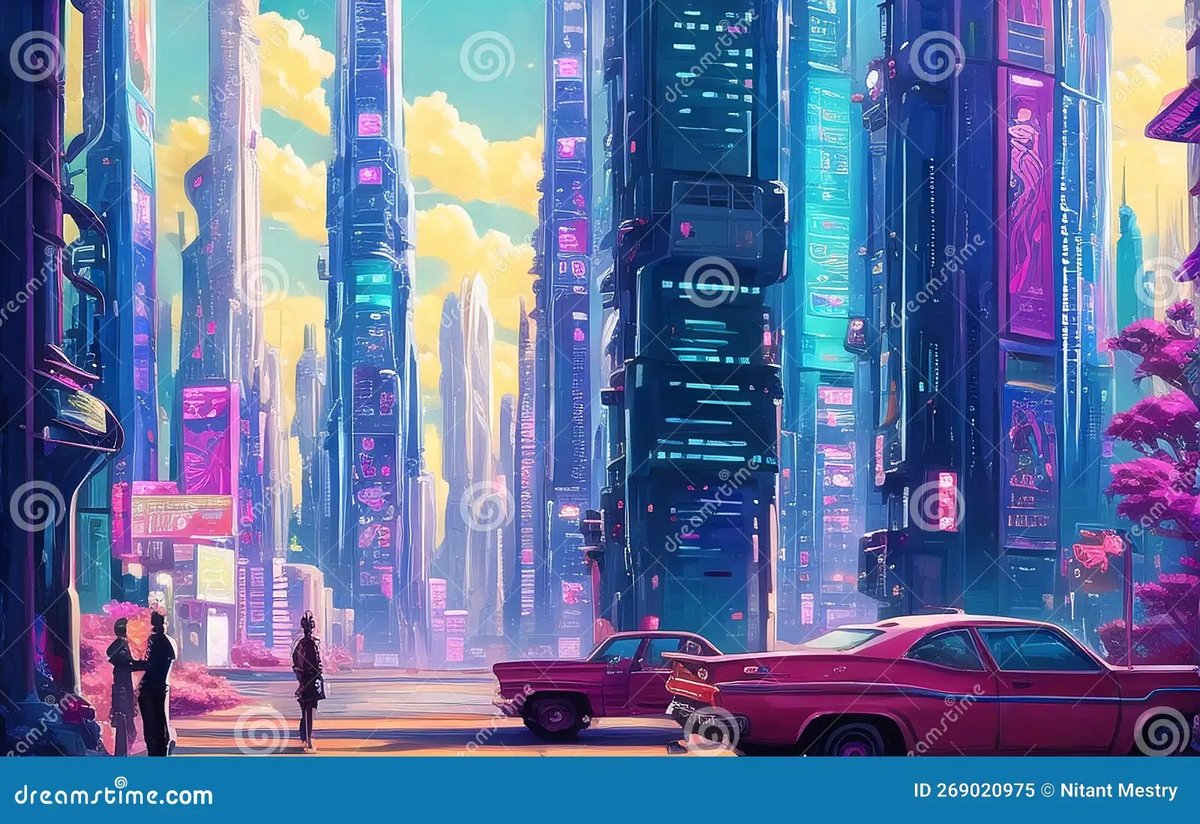
The future, it turns out, isn't just about what's built, but how it feels. Crafting an AI city image that truly captivates goes far beyond just prompting "futuristic city." It dives deep into Styling and Mood for AI City Images (Cyberpunk, Fantasy, etc.), transforming a bland digital render into a vibrant, emotive world that tells a story. Whether you're aiming for a grimy, neon-soaked dystopia or a soaring, ethereal sky-city, the nuances of your artistic choices dictate the emotional resonance and visual impact.
At a Glance: Your Blueprint for AI City Vision
- Beyond Defaults: AI excels at generating, but you are the director. Don't settle for generic; guide the AI with specific artistic intent.
- Mood First: Begin by defining the emotional atmosphere you want to evoke. Is it hopeful, terrifying, mysterious, bustling?
- The Five Pillars of Style: Master composition, color, lighting, architecture, and intricate details to control your output.
- Genre is Your Canvas: Cyberpunk, Fantasy, Solarpunk, Sci-Fi—each genre comes with its own visual language and emotional palette.
- Prompting is Iteration: Don't expect perfection on the first try. Refine your prompts, experiment with weights, and learn what resonates with your chosen AI model.
- Story in Every Pixel: Every design choice, from the glow of a street sign to the texture of a building, should contribute to the city's underlying narrative.
Beyond the Blueprint: Why Styling and Mood Matter for AI Cities
Think of the greatest fictional cities—Blade Runner's Los Angeles, Minas Tirith, Coruscant. What makes them iconic isn't just their buildings, but their vibe. They have personality, history, and a distinct emotional pull. When you're generating AI city images, you're not just creating structures; you're building worlds.
The difference between a generic "sci-fi city" and a truly memorable one lies in the deliberate application of styling and mood. Generic output often feels flat, lacking the weight of atmosphere or the spark of a unique vision. By actively shaping these elements, you empower your AI to go from rendering a collection of buildings to crafting a living, breathing metropolis that leaves an impression. It's about setting the narrative tone, hinting at the lives within its walls, and provoking an emotional response from the viewer. Without a conscious focus on style and mood, even the most technically impressive AI render can feel soulless.
The Architect's Toolkit: Core Elements of AI City Styling
To truly command your AI, you need to understand the fundamental components that contribute to a city's visual style and emotional impact. These are your levers, your dials, your artistic brushstrokes in the digital realm.
Composition & Perspective: Framing the Narrative
How you frame your city dictates what story you tell. A towering, worm's-eye view can emphasize scale and power, perhaps making the viewer feel small and insignificant in a dystopian setting. A wide-angle, panoramic shot might showcase the grandeur of a utopian landscape. Eye-level shots ground the city in human experience, while aerial views offer a sense of order or dizzying complexity.
Consider:
- Angle: Low-angle (looking up), high-angle (looking down), eye-level, isometric.
- Framing: Close-up on a specific street, wide shot of the skyline, through a window.
- Leading Lines: Roads, rivers, light trails that draw the eye into the scene.
- Depth: Foreground elements (pedestrians, vehicles), midground (buildings), background (skyline, mountains) to create dimension.
For instance, a prompt for a bustling market in a fantasy city might specify "street-level view, looking up at market stalls, with distant castle spires framed between buildings."
Color Palettes: Painting the Emotion
Color is arguably the most direct way to evoke mood. A vibrant, diverse palette can suggest life and energy, while monochromatic or muted tones might hint at oppression or decay.
- Warm Colors (Reds, Oranges, Yellows): Energy, danger, excitement, warmth, sometimes chaos.
- Cool Colors (Blues, Greens, Purples): Calm, mystery, technology, sadness, tranquility, coldness.
- Saturated vs. Desaturated: High saturation often means intensity and vibrancy; low saturation can imply age, desolation, or a sense of unreality.
- Contrast: The interplay between light and dark, or complementary colors, adds visual interest and can direct attention. Neon against dark concrete, for example, is a cyberpunk staple.
- Harmonies: Using colors that are analogous (next to each other on the color wheel) creates a sense of unity; complementary colors (opposite on the wheel) provide strong contrast and visual pop.
Specify your palette clearly: "a city bathed in golden hour light," "predominantly teal and magenta neon glow," "desaturated sepia tones with hints of emerald green."
Lighting & Atmosphere: The Soul of the Scene
Lighting isn't just about brightness; it's about mood, drama, and realism. It dictates shadows, reflections, and how colors are perceived. Atmosphere layers on top, adding texture and depth to the air itself. Mastering this is key to truly believable scenes, especially when exploring advanced AI image lighting techniques.
- Time of Day:
- Dawn/Dusk (Golden Hour): Soft, warm light, long shadows, romantic or mysterious feel.
- Mid-day: Harsh, direct light, sharp shadows, clear visibility, can feel mundane or stark.
- Night: Dramatic lighting, strong contrasts, neon glows, hidden dangers, intimacy.
- Weather Conditions:
- Rain/Mist: Adds reflections, blurs distant objects, creates a somber or mysterious mood, perfect for noir or cyberpunk. (Recall the Easy-Peasy.ai source mentioning "drenched, reflective pavements" in cyberpunk.)
- Fog: Obscures details, creates depth, eerie or ethereal.
- Snow: Quiet, stark, beautiful, can feel desolate or magical.
- Volumetric Effects: Dust, smoke, smog, steam—these add tangible presence to the air, enhancing realism and mood.
- Light Sources: Sun, moon, streetlights, holographic projectors, bioluminescent flora, magic spells, neon signs. How these interact with the environment is crucial.
Try "cityscape at magic hour, volumetric fog rolling through the skyscrapers," or "dystopian street bathed in the harsh glow of industrial floodlights and flickering neon."
Architectural Language: Buildings That Speak
The style, scale, and materials of your city's buildings are fundamental to its identity. Each architectural choice communicates something about the society that built it. To learn more about how different designs affect the overall impression, consider researching architectural styles for fantasy cities for inspiration.
- Style:
- Gothic: Ornate, spires, gargoyles, dramatic. (Fantasy)
- Brutalist: Heavy, concrete, imposing, often dystopian. (Cyberpunk, Sci-Fi)
- Art Deco: Geometric, elegant, metallic, streamlined. (Retro-futurism, utopian sci-fi)
- Organic/Biomorphic: Flowing lines, natural shapes, integrated with nature. (Solarpunk, high fantasy)
- Hyper-modern/Sleek: Glass, chrome, minimalist, towering, often clean and sterile. (Utopian Sci-Fi, some Cyberpunk)
- Steampunk: Victorian aesthetics, exposed gears, brass, intricate machinery. (Fantasy, alt-history sci-fi)
- Materials: Concrete, steel, glass, wood, stone, bioluminescent polymers, crystal, plasma.
- Scale: Towering skyscrapers, sprawling districts, compact villages, floating platforms.
- Condition: Pristine, decaying, overgrown, battle-scarred.
Prompt for "a city of soaring, crystalline towers intertwined with ancient, moss-covered ruins" for a fantasy setting, or "grimy, stacked hab-blocks of concrete and rusted steel" for a Cyberpunk aesthetic.
Details & Dwellers: Bringing Life to the City
It's the small things that truly sell a world. Details add texture, believability, and a sense of ongoing life.
- Vehicles: Flying cars, hoverbikes, classic cars, horse-drawn carriages, steam trains. The type and condition of vehicles speak volumes about the tech level and social fabric. Thinking about designing futuristic vehicles with AI can elevate your scene.
- Street Furniture: Benches, lampposts, trash cans, market stalls, vending machines. These anchor the scene in a relatable reality.
- Flora: Trees, plants, moss, vines. Are they integrated into architecture, wild and overgrown, or entirely absent? Solarpunk, for example, heavily features lush greenery.
- Inhabitants: Crowds, individual characters, androids, aliens, mythical creatures. Their clothing, actions, and density contribute to the city's energy. Remember the "diverse descents" and "tech-enhanced clothing" of pedestrians in the Easy-Peasy.ai Cyberpunk description.
- Signs & Holograms: Advertising, warnings, propaganda, public information. These are crucial for a sense of a living, breathing economy and culture.
- Grime & Decay: Rust, graffiti, broken windows, water stains. These elements tell a story of neglect, age, or rebellion.
Try "a bustling market street with glowing food stalls, holographic advertisements, and diverse pedestrians in trench coats and cybernetic implants" for a rich Cyberpunk scene. Or, for fantasy, "ancient stone streets bustling with merchants and mythical creatures, banners strung between ornate buildings."
Genre Deep Dive: Crafting Distinct Urban Moods
Now, let's apply these tools to specific genres, understanding their unique visual and emotional vocabularies.
Cyberpunk: Neon Drenched Dystopias
The hallmark of Cyberpunk is high-tech, low-life. It's a genre of extreme contrasts: gleaming skyscrapers against grimy alleyways, advanced technology coexisting with poverty, corporate power clashing with underground rebellion. The mood is often oppressive, exciting, dangerous, and sometimes melancholic.
- Key Visual Elements (drawing from Easy-Peasy.ai source):
- Architecture: Towering, intricate futuristic structures, often vertically stratified (rich at the top, poor at the bottom). Muted steel and concrete form the base, contrasted with vibrant additions.
- Color Palette: Dominated by dark, muted blues, purples, greys, and blacks, sharply contrasted by vivid, saturated neon (pinks, blues, greens, yellows, reds) from signs and holographic displays. "Lively neon signage contrasts against the muted steel and concrete, casting an array of vivid colors onto drenched, reflective pavements."
- Lighting & Atmosphere: Predominantly night scenes. Persistent rain, mist, or smog. Intense, localized light sources (neon, headlights, glowing screens) against deep shadows. "Levitating vehicles zoom past skyscrapers under a chrome-tinted sky."
- Details: Drenched, reflective pavements. Intricate latticework of wires and pipes. Holographic advertisements. Flying vehicles (spinners). Diverse pedestrians wearing "multifaceted tech-enhanced clothing." Graffiti, street vendors, signs of decay and advanced tech interwoven. "Machines and humans coexist, interlaced in an intricate latticework of life and artificial life."
- Composition: Often chaotic, dense, claustrophobic, with a mix of sprawling cityscapes and tight, alleyway views.
- Keywords to Prompt: "futuristic cityscape," "dystopian metropolis," "neon-soaked streets," "rain-slicked pavement," "holographic advertisements," "towering megastructures," "gritty realism," "synthwave aesthetic," "cybernetic implants," "levitating vehicles."
Fantasy: Ancient Wonders & Magical Realms
Fantasy cities are boundless, ranging from medieval fortresses to ethereal elven enclaves, from bustling merchant hubs to cities powered by arcane energies. The mood can be awe-inspiring, mysterious, dangerous, tranquil, or whimsical.
- Key Visual Elements:
- Architecture: Castles, spires, ornate stonework, carved wood, buildings integrated with natural formations (mountains, giant trees). Often organic shapes or gothic/roman influences.
- Color Palette: Earthy tones (greens, browns, greys) for naturalistic settings; jewel tones (deep blues, purples, golds, emeralds) for magical or royal areas; soft pastels for ethereal realms. Glowing magical effects add splashes of color.
- Lighting & Atmosphere: Often dramatic natural light (sunlight piercing clouds, moonlit nights), but also magical glows, torchlight, glowing runes, shimmering crystals. Clear skies or light mist.
- Details: Cobblestone streets, banners, market stalls, fantastical creatures (dragons, griffins), unique inhabitants (elves, dwarves, orcs) in period-appropriate or magical attire. Ancient symbols, glowing energy conduits, ornate bridges.
- Composition: Can emphasize grandeur (wide shots of castles), mystique (narrow, winding streets), or adventure (heroic vantage points).
- Keywords to Prompt: "epic fantasy city," "medieval fortress," "elven tree city," "dwarven underground city," "magical metropolis," "soaring spires," "glowing runes," "steam-powered," "dragon-rider," "ancient cobblestone," "crystal towers."
Solarpunk: Verdant Futures & Sustainable Dreams
Solarpunk envisions an optimistic, sustainable future where technology and nature coexist harmoniously. It's a direct counterpoint to Cyberpunk's dystopia, often focusing on lush greenery and renewable energy.
- Key Visual Elements:
- Architecture: Buildings integrated with vertical farms, rooftop gardens, solar panels, wind turbines. Use of natural materials like wood, bamboo, and recycled elements alongside sleek, curved designs. Green spaces are paramount.
- Color Palette: Predominantly greens, blues, and earth tones. Bright and natural, with pops of warm yellow/orange from solar tech and natural light.
- Lighting & Atmosphere: Bright, clean, abundant sunlight. Clear skies. Natural mist or dew. A sense of freshness and calm.
- Details: Bioluminescent plants, eco-friendly transportation (electric trams, bikes), clean energy infrastructure, hydroponic gardens, integrated waterways, healthy, happy inhabitants.
- Composition: Open, airy, emphasizing connectivity between nature and architecture.
- Keywords to Prompt: "solarpunk city," "eco-futuristic," "sustainable urbanism," "vertical gardens," "bioluminescent flora," "solar-powered," "clean energy," "green architecture," "harmonious future."
Sci-Fi (General/Utopian): Sleek Lines & Advanced Living
This broad category covers everything from gleaming utopias to sterile, highly advanced civilizations. It's less gritty than cyberpunk and more focused on technological advancement and order.
- Key Visual Elements:
- Architecture: Smooth, often monochromatic, sleek designs. Glass, polished metal, advanced composites. Often minimalist and towering, emphasizing efficiency and cleanliness.
- Color Palette: Primarily cool blues, whites, greys, and silvers, with occasional pops of primary or futuristic accent colors. Can be stark or subtly vibrant.
- Lighting & Atmosphere: Bright, even, often artificial interior lighting. Clear skies in outdoor scenes, sometimes with unique atmospheric effects (e.g., distant nebula).
- Details: Flying vehicles, advanced drones, holographic interfaces, uniformed citizens, automated systems, monorails, anti-gravity platforms. Emphasis on order and function. For insights into integrating human-like elements, explore integrating compelling characters into AI art.
- Composition: Often symmetrical, orderly, emphasizing clean lines and vast spaces.
- Keywords to Prompt: "utopian city," "futuristic metropolis," "sleek architecture," "glass and chrome," "anti-gravity platforms," "monorail system," "alien cityscape," "advanced civilization."
The Prompt Whisperer: Guiding Your AI's Artistic Hand
Knowing the elements and genres is one thing; translating that into effective prompts is another. This is where your directorial skills truly shine, and where you'll find some of the best Reddit city image prompts offer incredible inspiration.
Specificity is Your Superpower
Don't just say "city." Say "a neo-futuristic megalopolis at dawn, viewed from a high angle, with glowing cherry blossoms and sleek maglev trains." The more details you provide about style, mood, and elements, the more accurately the AI can render your vision. Think of your prompt as a detailed script for a movie scene.
Layering Descriptors
Combine the tools we've discussed. Instead of just "Cyberpunk city," try: "Cyberpunk metropolis, night, heavy rain, neon pink and electric blue lighting, dramatic reflections on wet pavement, towering Brutalist skyscrapers with holographic ads, low angle, cinematic." Each layer refines the image further. Consider effective prompt engineering tips for urban scenes to build more complex and precise instructions.
Harnessing Negative Prompts
Sometimes, telling the AI what not to include is as important as telling it what to include. If your Solarpunk city keeps showing too much industrial smokestack, add (negative prompt: smoke, pollution, grim, dystopian). This helps steer the AI away from undesired aesthetics.
Iteration and Refinement
Generating AI images is a conversation, not a one-off command.
- Start Broad: Begin with core concepts (e.g., "Fantasy city, high angle, sunset").
- Add Key Elements: Introduce specific architectural styles, lighting, and primary colors (e.g., "Fantasy city, towering gothic spires, warm orange sunset glow, ornate details").
- Refine Mood & Atmosphere: Inject weather, specific emotional tones, and detailed elements (e.g., "Epic fantasy city, gothic spires piercing storm clouds, dramatic sunset, light filtering through mist, ancient cobblestone streets, bustling marketplace, cinematic, highly detailed").
- Experiment: Try different seed numbers, adjust prompt weights, or even switch AI models if you're not getting the desired results. Don't be afraid to deviate and see what unexpected gems appear.
Common Pitfalls to Avoid in AI City Generation
Even with the best intentions, it's easy to fall into traps that yield less-than-stellar results.
- Vagueness: The most common mistake. A prompt like "city" will give you a generic, uninspired image. Be explicit.
- Over-prompting: While specificity is good, an overly long, convoluted prompt with too many conflicting ideas can confuse the AI, leading to a muddled or illogical output. Focus on clarity and hierarchy of importance.
- Ignoring Mood: Focusing solely on architectural style without considering the emotional atmosphere can lead to technically correct but sterile images. Always ask: "How does this city feel?"
- Lack of Iteration: Settling for the first few generations means you're missing out on the AI's full potential. The best images often come after several rounds of refinement.
- Inconsistent Style: Mixing too many disparate architectural styles, color palettes, or lighting schemes without a clear artistic reason can make your city feel disjointed and unbelievable.
- Forgetting Details: While grand structures are impressive, the small details—the people, the street clutter, the signs of life—are what make a city feel alive and lived-in.
Beyond the Frame: What Makes an AI City Image Truly Resonate?
Ultimately, the most successful AI city images aren't just technical marvels; they're narrative hooks. They invite the viewer to imagine the stories unfolding within their digital walls, the lives of their inhabitants, and the history embedded in their architecture.
By meticulously controlling the styling and mood, you're not just generating an image; you're cultivating an experience. You're crafting a window into a world that exists only in your imagination, brought to life by the power of AI. It's a continuous journey of discovery, blending artistic intuition with technical prompting. So, embrace the role of the visionary architect, experiment fearlessly, and let your AI construct the city of your wildest dreams—or nightmares. The future of urban imagination is literally at your fingertips.